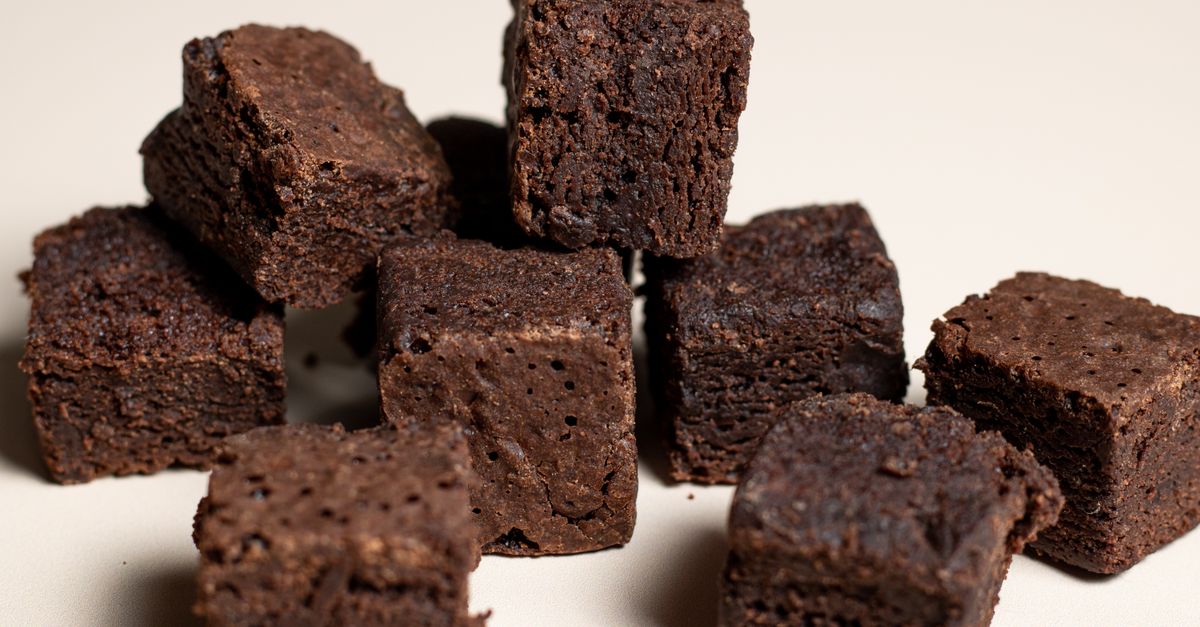
Why Your Homemade Brownies Are Cakey (And The Simple Shifts That Guarantee Fudgy Perfection Every Time)
Are you constantly disappointed by your homemade brownies, finding them more akin to chocolate cake than the rich, dense, fudgy squares you crave? You’re not alone. For years, I battled the elusive brownie. My recipes promised chewiness and depth, but delivered airy, crumbly results. It felt like a culinary conspiracy – every batch rising too high, tasting too light, and generally missing that satisfying heft that defines a truly great brownie. The problem wasn’t your recipe, per se, but likely a few subtle, yet critical, overlooked details in the ingredients and technique that fundamentally alter the structure and texture of your bake.
I’ve spent countless hours in my kitchen, experimenting, failing, and finally, succeeding. What changed everything for me wasn’t a secret ingredient or a fancy gadget, but a deep understanding of why brownies become cakey and how to systematically prevent it. It’s about controlling moisture, fat, and aeration in ways most home bakers don’t consider. Forget about just ‘following the recipe’ – true brownie mastery comes from understanding the science behind that irresistible fudgy texture.
Key Takeaways
- Prioritize fat over flour and sugar to create a denser, fudgier brownie texture.
- Melted butter and oil are superior to softened butter for achieving fudginess.
- Reduce leavening agents and aeration to prevent a cake-like rise and texture.
- Use egg yolks and a small amount of dark brown sugar for enhanced richness and chewiness.
The Flour-to-Fat Fallacy: Why Too Much Flour Equals Cake
Most conventional brownie recipes, especially those aimed at beginners, often call for a slightly higher ratio of flour, or instruct you to measure it in a way that leads to over-inclusion. In my experience, this is the single biggest culprit for cakey brownies. Flour, with its gluten-forming proteins, is the structural backbone of cakes. More flour means more structure, more crumb, and ultimately, a lighter, cakier texture. If you want fudgy, you need to actively reduce that structure.
What changed everything for me was shifting my mindset from “how much flour does this need?” to “how little flour can I get away with?” I realized that many recipes operate under the assumption that a home baker wants a brownie that rises somewhat and holds its shape with ease. But a truly fudgy brownie doesn’t need to rise much at all; its appeal lies in its dense, almost truffle-like consistency.
For most brownie recipes, aim for a ratio where the fat (butter/oil) and sugar combined outweigh the flour. For example, if a recipe calls for 1 cup of all-purpose flour (roughly 120-130g), ensure your combined fat and sugar are significantly more, perhaps in the 200-250g range. This isn’t a hard and fast rule for every recipe, but it’s a critical directional shift. Also, always weigh your flour. Scooping flour directly from the bag can easily add 20-30% more than what’s intended, turning your fudgy dream into a cakey nightmare before you even start mixing. My digital kitchen scale became my best friend in this pursuit.
When I started actively reducing flour, even by a tablespoon or two, and weighing it precisely, the results were immediate. The brownies became denser, richer, and had that tell-tale fudgy chew. It’s a subtle but profound change in the ingredient balance that directly combats cakiness.
The Butter Dilemma: Melted vs. Creamed (And Why Oil Is Your Secret Weapon)
Another common mistake leading to cakey brownies is how the butter is handled. Many recipes instruct you to cream softened butter and sugar together, just like you would for cookies or cakes. The problem? Creaming butter and sugar incorporates air, and air, as we know, leads to a lighter, cakier texture. It’s the opposite of what we want for fudginess.
To achieve that dense, decadent fudginess, you need to use melted butter – and even better, a combination of melted butter and a neutral oil. Melted butter minimizes air incorporation and contributes to a denser crumb. It also allows for more even distribution of fat throughout the batter, leading to a smoother texture.
Adding a neutral oil, like canola or vegetable oil, takes it a step further. While butter provides flavor, oil contributes pure, unadulterated moisture and tenderness without solidifying in the same way butter does when cooled. This keeps your brownies exquisitely fudgy even when they’re cold, preventing them from becoming dry or crumbly. In my kitchen, I often use a 2:1 ratio of melted butter to oil. For instance, if a recipe calls for 1 cup (226g) of butter, I might use 150g melted butter and 75g vegetable oil. This small adjustment radically improves both the texture and the shelf life of the fudginess.
The difference is stark. Brownies made with creamed butter rise higher and have a more open, uniform crumb. Those made with melted butter and a touch of oil spread more, stay flatter, and boast a tight, moist, and incredibly dense texture that screams fudgy perfection. It’s not just a technique; it’s a foundational shift in how you build the brownie’s core structure.
The Leavening Trap: Less Rise, More Fudge
Leavening agents, like baking powder and baking soda, are crucial for cakes, providing the lift and airy texture. For fudgy brownies, however, they are often an enemy, not a friend. Many brownie recipes, especially those that aim for a more ‘cake-like’ brownie (which, in my opinion, misses the point entirely), include too much leavening, causing the brownies to rise excessively and develop an undesirable cakey crumb.
My journey to fudgy perfection involved systematically reducing or even eliminating baking powder from certain recipes. If a recipe calls for 1 teaspoon of baking powder, try reducing it to 1/4 or 1/2 teaspoon. If it’s a small batch recipe, you might even omit it entirely. The subtle lift from the eggs should be sufficient, or even desirable, to maintain a dense, chewy texture.
Think about it: a truly fudgy brownie is rich, almost flat, and dense, with minimal air pockets. Every bit of leavening works against that goal. While some recipes might include a pinch of baking soda to react with acidic ingredients like cocoa powder, its primary role in fudgy brownies should be flavor enhancement and color, not aggressive rise. If you’re using Dutch-processed cocoa, which is less acidic, you might not even need baking soda at all.
This was a major revelation for me. I used to think I had to add leavening for ‘a good rise.’ But ‘a good rise’ in a brownie context usually means ‘a cakey brownie.’ Embracing the flatness, the lack of dramatic puff, was the key to unlocking the true fudgy experience. It’s about letting the fat and sugar define the texture, not the air bubbles.
Egg Economics: Whites for Cake, Yolks for Fudge
Eggs play a dual role in baking: egg whites provide structure and aeration (think meringues and airy cakes), while egg yolks contribute richness, fat, and emulsification. For cakey brownies, a higher ratio of egg whites to yolks will contribute to that airy, lighter texture. For fudgy brownies, we want to tip the scales in favor of the yolks.
In my experiments, replacing one whole egg with two egg yolks consistently produced a noticeably denser, chewier, and richer brownie. For example, if your recipe calls for two whole eggs, consider using one whole egg and two egg yolks. The extra fat and emulsifiers from the yolks create a tighter, more cohesive crumb that resists becoming dry or crumbly. They also enhance the overall richness and depth of flavor, making the chocolate sing even louder.
Furthermore, be mindful of how you incorporate your eggs. Whisking eggs vigorously, especially after combining them with sugar, can whip in too much air. Instead, gently whisk your eggs and incorporate them just until combined. Overmixing at this stage is another common pitfall that introduces air and contributes to a cakier result. My rule of thumb: once the eggs go in, mix just enough to blend, then stop. Any additional mixing is detrimental to fudginess.
This egg adjustment was a game-changer. The brownies didn’t just become fudgier; they developed a luxurious mouthfeel and a richer, more nuanced flavor that elevated them far beyond any store-bought equivalent. It’s a small tweak with massive textural impact.
The Sugar Spectrum: Granulated for Structure, Brown for Chew
Sugar is not just for sweetness; it significantly impacts texture. Granulated sugar, with its fine crystals, helps create a crisper top crust and a slightly more structured crumb when used in higher quantities. For cakey brownies, a recipe might lean heavily on granulated sugar. However, for maximum fudginess and chew, you need to introduce or increase the amount of dark brown sugar.
Dark brown sugar contains molasses, which is hygroscopic, meaning it attracts and retains moisture. This extra moisture content directly contributes to a softer, chewier, and ultimately fudgier texture that stays moist for longer. The molasses also adds a subtle caramel note that deepens the chocolate flavor beautifully.
If your recipe calls for all granulated sugar, try substituting half of it with dark brown sugar. For instance, if it calls for 1.5 cups of granulated sugar, use 3/4 cup granulated and 3/4 cup dark brown. You’ll immediately notice the difference in the batter’s consistency and, more importantly, in the final texture of the brownie. It’s a foundational shift in the sugar composition that yields profound textural benefits. My absolute favorite brownie recipes leverage a mix, with a significant portion of dark brown sugar. This combination ensures not just sweetness, but a nuanced chewiness that is irresistible.
Baking Temperature and Time: The Underrated Controls
Even with all the right ingredients and mixing techniques, improper baking can undo everything. High baking temperatures can cause brownies to rise too quickly and bake unevenly, leading to dry edges and a cakey interior. Overbaking, regardless of temperature, is a guaranteed path to dry, crumbly, cakey brownies.
For truly fudgy brownies, I’ve found that a slightly lower baking temperature and vigilant monitoring are key. Aim for 325°F (160°C) instead of 350°F (175°C). This allows the brownies to bake more gently and evenly, preventing them from puffing up too much and retaining precious moisture.
Crucially, do not overbake. A fudgy brownie will still look slightly underbaked in the very center when it’s ready. A toothpick inserted into the center should come out with moist crumbs, not liquid batter, but definitely not clean. The residual heat will continue to cook the brownies as they cool, a process known as carryover cooking. Pulling them out just before they seem ‘done’ is an act of faith that will be richly rewarded with maximum fudginess.
I used to be so afraid of underbaked goods, always leaving them in for an ‘extra five minutes.’ That was my biggest mistake. Now, I trust the moist crumb test. The moment the edges are set and the center still looks a bit wobbly with moist crumbs, they come out. This is the difference between a brownie that is just fudgy, and one that is transcendentally rich and dense.
Cooling Patience: The Final Fudgy Frontier
This might be the hardest step for any impatient baker, but it’s absolutely non-negotiable for fudgy brownies: let them cool completely before cutting. I mean completely, ideally for several hours, or even overnight in the fridge.
As brownies cool, their internal structure sets, and the moisture redistributes. Cutting into warm brownies not only makes for messy slices but also compromises the fudgy texture. The warm interior hasn’t had a chance to fully set, making it seem less dense and more prone to crumbling. Refrigerating them for a few hours can further enhance their density and chewiness, making them almost impossibly fudgy.
I understand the temptation. The aroma of warm chocolate filling your kitchen is almost unbearable. But I promise you, the wait is worth it. What emerges after a patient cool is a perfectly set, dense, and unbelievably fudgy brownie that holds its shape beautifully and melts in your mouth. This final step is often overlooked but it is a critical component in achieving that coveted dense, chewy, fudgy texture.
Frequently Asked Questions
Q: Can I use all oil instead of butter for fudgy brownies?
A: While using all oil will definitely result in a very moist and fudgy brownie due to its liquid state at room temperature, you will sacrifice some of the rich, nuanced flavor that butter provides. A combination of melted butter and oil (e.g., 2:1 butter to oil ratio) often yields the best balance of flavor and texture.
Q: My brownies are still cakey even after trying these tips. What else could it be?
A: Double-check your flour measurement again – using a digital scale is paramount. Also, ensure you are not overmixing your batter after adding flour; even gentle stirring can develop too much gluten. Finally, confirm your oven temperature with an oven thermometer, as many ovens run hotter or colder than indicated, which can impact bake time and texture.
Q: Why do you recommend dark brown sugar over light brown sugar?
A: Dark brown sugar has a higher molasses content than light brown sugar. This extra molasses not only imparts a deeper caramel flavor but also contributes more moisture to the batter, leading to a chewier, more fudgy brownie that stays moist for longer.
Q: Can I add chocolate chips or nuts to these fudgy brownies?
A: Absolutely! Adding chocolate chips, chopped nuts, or even swirls of caramel or peanut butter can enhance your brownies. Just be mindful not to overmix when incorporating these additions, as excessive stirring can develop gluten and lead to a cakier texture. Fold them in gently.
Q: How long do fudgy brownies last, and how should I store them?
A: Fudgy brownies, when stored in an airtight container at room temperature, typically last 3-4 days. For extended freshness and an even denser, chewier texture, you can store them in the refrigerator for up to a week. They also freeze beautifully for up to 2-3 months in an airtight container.
Conclusion
Transforming your homemade brownies from cakey disappointments to fudgy masterpieces isn’t about finding a magical new recipe; it’s about mastering a few fundamental shifts in technique and ingredient understanding. By carefully controlling your flour-to-fat ratio, opting for melted fats, minimizing leavening, leveraging the richness of egg yolks, embracing dark brown sugar, baking at a lower temperature, and exercising patience during the cooling process, you’ll unlock the secret to consistently decadent, dense, and perfectly fudgy brownies every single time. It’s a journey I took, and one that changed my baking forever. Now, go forth and bake with confidence, knowing that fudgy perfection is within your grasp.
Written by Sarah Jenkins
Saving & Financial Planning
Sarah leveraged her freelance writing income to eliminate significant debt and now shares her strategies.
You Might Also Like

Why Most People Fail at Mastering Their New Air Conditioner (And The Strategic Approach That Actually Works for Real Comfort and Savings)
Struggling with your new AC? Discover why basic settings fall short and the strategic approach to achieve real comfort and energy savings.
Why Your Car Stereo Has No Bass (And What Actually Works for Deep, Punchy Sound)
Struggling with weak car bass? Discover why most setups fail and learn the pro strategies for deep, punchy sound that transforms your driving experience.
Why Your DIY Hydroponics Fails Most People (And What Actually Works for Bountiful Harvests)
Struggling with DIY hydroponics? Discover the hidden mistakes ruining your yields and the actionable strategies that lead to thriving, abundant harvests.